Thursday, July 30, 2015

Not Another Boy

"Another boy!"

Those are words stated by a Planned Parenthood staffer during the dissection of an aborted baby. A boy. A baby boy. Call it a lump of tissue. Call it a symbol of choice among an evolved, civilized people. Call it whatever you want, but as we herniate ourselves attempting semantic gymnastics, let us at the very least have the guts to call it for what it is.

Another boy.

Two simple words, the significance of their meaning dependent upon their surroundings and who is uttering them. Proclaimed from the delivery room, they represent joy and happiness as another boy is welcomed into the world. From this Planned Parenthood clinic, they represent the horror of a conscience seared by sin and wickedness

Another boy

Together, these two words represent one dead baby. Separately, they represent an untold throng of boys who preceded this precious life, snuffed out by crushing forceps and dismembered on a plate for parts.

Another boy.

As a people who claim to stand for justice and the rights of those who cannot speak for themselves, this is a test of those claims. Do we truly stand for justice, or is justice simply defined by whatever pulls on our collective heartstrings at any given moment? Is justice a constant? Or is it dependent upon whatever the media chooses to sound the klaxon over in order to whip the civilized into a moral and ethical frenzy? When a lion is "taken" by a dentist, the conscious of a nation collectively mourns and shouts for justice. How much more should that conscience mourn and shout for justice when the one taken is "another boy"?

Another boy.

The biggest obstacle for people to get past in order to change their minds about the nature of abortion isn't that it protects choice. It's that it means admitting that abortion is and always has been murder. It's easy to get upset over a dead lion. Doing so doesn't mean admitting culpability for millions of other dead lions. In order to change one's mind about abortion, however, that is exactly what one has to do; strip away all the whitewashed terms like "choice," "reproductive rights," and "tissue" and call it for what it is.

Another boy.

What is his name? What are the names of the boys (and girls) who collectively form the "another"? When will we finally stand up and declare that everything else that we worry about when we step into the voting booth pales in comparison to our moral obligation to stand up for the boys and girls who die each and every day in this country? There is no greater issue of justice then this. May our voices go forth with a new pronouncement from this day forth:

Not another boy!


Friday, June 26, 2015

How Should We Respond To The Supreme Court Ruling On Same-Sex Marriage?

The Supreme Court today has issued its ruling, and although most of us probably are not terribly surprised, it is still a blow to the gut for those who believe that a biblical view of marriage is one man and one woman. As Christians, how should we respond?

We should continue to live by faith. The Lord is still on His throne. Heaven is not in crisis-mode. God's sovereignty is not trumped by the will of man, whether that will is executed in the voting booth or from the bench. That the world would choose to bow before self rather than God is no surprise. But as those who willingly bow the knee to King Jesus, we need not cower in fear nor quit in defeat. Rather, we exalt in hope, because our God reigns!

We should continue to live the gospel. The gospel of Jesus Christ is the only means of true identity for men and women. Without the gospel, man's identity is just a twisted version of what God originally created. The gospel restores this identity by making all things new, and as Christians we should live resurrection lives before a world desperately in need of the restoration accomplished at the cross.

We should continue to proclaim the gospel. Because the gospel is the only answer to the sin issue that plagues mankind and twists our understanding of what it really means to be men and women, we must be heralds of this message. Now more then ever, you and I need to declare to the world, in gentle words and in compassionate deeds, one simple thing: Jesus Christ, crucified and resurrected.

We should continue to invest in our churches. The church is a place for coming together to worship our reigning God, for encouraging one another to be faithful, for helping to bear the burdens of those who are struggling to do just that. We need to continue to build into the church by attending, utilizing spiritual gifts for the building up of the body, and ministering to one another as well as to those outside. Our churches will be ground zero for the coming wave of broken people that will soon be looking for answers and healing, but in order to minister to them tomorrow, we must be investing in our churches today.

We should continue to invest in our marriages and families. The greatest testimony to a biblical view of marriage and family are biblical marriages and families. We cannot stand in the public square and disavow other's households if our own is in disorder. No one will listen. Our marriages and homes must be built upon the gospel, steeped in truth, and overflowing with grace and love.

We should continue to pray. And if we haven't been praying, we should start. We should ask the Lord to protect His people, churches, and ministers in the days to come. And if He chooses to permit us to suffer, let us pray that He will provide us with the strength to stand firm. We should entreat Him to break our hearts over our own sin as well as soften them towards those whom sin has crushed. We should implore Him to give us opportunities to tell others what true redemption and liberty really are, and we should beg Him to give us gentle boldness when those opportunities present themselves.

There are times in history when God permits events to occur that rouse His slumbering children, that causes us to shake off the comfortable blankets of apathy and wipe the sleep from our eyes. The days of mediocre, comfy Christianity in America are gone. Today we step into a new world. May we do so firmly entrenched in the gospel of Jesus Christ, newly aware of who we are in Jesus and of the power of His name. And may we never, ever recover.

Monday, March 9, 2015

Romans 5-8 in 15 Words

"For I am confident of this very thing, that he who began a good work in you will perfect it until the day of Christ Jesus." (Phil.1:6, NASB)
Here in this verse, the Apostle Paul summarizes the great theme of security laid out in his magnum opus, the letter to the Romans. In the Greek text, Paul's certainty of the fulfilment of the believer's salvation is expressed in a mere fifteen words (ninety-seven characters--how's that for coming in under the limit for a tweet?), yet it is frontloaded with rich theology.

The foundation of his confidence is where those who reject eternal security usually go off the rails, for if the fulfillment of salvation is dependant upon us even in the slightest bit, then we have good cause for concern. But Paul does not look to the Philippians as the means of this future perfection. Rather, his confidence is in God (v.3). It is God who set these saints apart as holy (that's what the word saint means), and Paul is absolutely certain that what God starts, He finishes. He will see them through to the end result. He will accomplish what He started. He will not lose a single one, but all who have had this good work begun in them will see it realized. This is no mere hope for Paul the way we so often understand hope, as something that is uncertain of actually coming to pass as when a trembling young man with sweating palms shyly asks a young lady to prom. Rather, this is Paul's certainty, his absolute assurance, his confident expectation. No matter what happens, Paul is confident that God will finish the work of salvation which He started. And the realization will be accomplished through the same means by which it was initiated--through Jesus Christ. His finished work on the cross saved them; His glorious appearing will perfect them.

Here, then, is the perfect summary statement to describe the extended teaching on the security of the believer that Paul presents in Romans 5-8. Those whom God has justified, Paul writes in Romans 5:1, have peace with God. That is the state of our relationship with God, dear Christian friend. The enmity has been replaced by peace. Where before we were the objects of God's wrath, now, because Jesus has taken our place and bore our punishment, we are now sons. Where before we looked to Him with only the anticipation of judgment, now we look to Him as a son looks to a father. Finally, we are at peace.

And Paul says that, as a result, we exalt in the glory of God. In Romans 3:23, it was the glory of God which we had fallen short of in our sinfulness. It was this glory, this fulness of all that God is in His being and Person that stood beyond our reach, and now Paul says that we exalt in it! We rejoice in it! We savor it! And when it is revealed in all its majesty on the day of Christ Jesus, it shall not bring death to us, but perfection and completion. Where now we see in a mirror dimly, in that day we shall see face to face. In that day we shall exalt in the glory of God, for that is why we were redeemed in the first place, "to the praise of the glory of His grace."

Romans 5 continues to demonstrate the reality that our justification by faith is a secure and unchanging justification, for if God has accomplished the greatest, most difficult thing possible--reconciling us while we were helpless sinners and enemies, then certainly He will do the easier thing, which is to complete what He started. He has already done the hard part--saving us. He most certainly will do the easy part--perfecting us. Through Jesus Christ He has transferred us from the mastery of sin and its cadaverous consequence to a new Head, Whose one act of obedience has produced righteousness and life. The wages of sin are most certainly death, but Paul's confidence for the Philippian believers is the provision of the free gift of eternal life!

In Romans 6-7 Paul turns to the life of the believer and the freedom to live righteous lives, yet even this is related to the security of the believer, for here we read that we have been raised from the dead with Christ. God has given us new life in Jesus Christ, and this new life is the birthday of this good work which He has begun in us and will complete. The flesh rebels, yet the field will be the Lord's!

Paul's confidence that the battle will be won is expressed in two phrases in Romans 8 which serve as bookends to the chapter: "Therefore there is now no condemnation for those who are in Christ Jesus" (v.1) and nothing "will be able to separate us from the love of God, which is in Christ Jesus our Lord" (v.39). No condemnation and no separation--that is the reality for the believer who has trusted in Christ. Truly, then, if God is for us, who is against us? And God really is for us! He gave up His Son in order to set into motion a plan, originated in eternity past, in which He would purchase us for Himself. The scourging, the cross, the tomb, all of it was so that He might purify for Himself a people that are His very own, to the praise of the glory of His grace.

Romans 5-8, then, encapsulated in fifteen words in the greeting of the letter to the Philippians. What God has started, He will finish. What is incomplete will be completed. What is imperfect will be perfected. And one day, when Jesus returns, we will know this completion, and we will exalt in the glory of God, for He will have completed what He started and fitted us perfectly to glorify Him for eternity.

Sola Deo Gloria!

Wednesday, March 4, 2015

Responding to the "Angry God" Perception

Do you see God as angry and vengeful, always ready to punish and judge? If this is you, then I would challenge you to take ten seconds to read Romans 5:6-10:
For while we were still helpless, at the right time Christ died for the ungodly. For one will hardly die for a righteous man; though perhaps for the good man someone would dare even to die. But God demonstrates His own love toward us, in that while we were yet sinners, Christ died for us. Much more then, having now been justified by His blood, we shall be saved from the wrath of God through Him. For if while we were enemies we were reconciled to God through the death of His Son, much more, having been reconciled, we shall be saved by His life. (NASB, 1995, emphasis mine)
Now, having read this description of God's disposition toward us, and having noted well the condition we were in at the time He acted, ask yourself this: is this the description of an angry, vengeful God? Does it match the perception of God that you have been holding on to all this time? Or is it just possible that your perception of God has been skewed? Be honest with yourself, now.

Friday, February 20, 2015

Spurgeon on the Importance of Participating in the Local Church


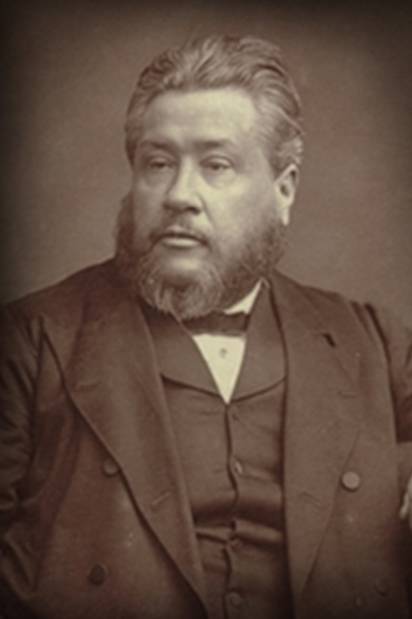
“I know there are some who say, “Well, I have given myself to the Lord, but I do not intend to give myself to the church.”  Now why not?  “Because I can be a Christian without it.”  Are you quite clear about that?  You can be as good a Christian by disobedience to your Lord’s commands as by being obedient?  What is a brick made for?  To help build a house.  It is of no use for that brick to tell you that it is just as good a brick while it is kicking about on the ground as it would be in the house.  It is a good-for-nothing brick.  So you rolling-stone Christians, I do not believe that you are answering your purpose.  You are living contrary to the life which Christ would have you live, and you are much to blame for the injury you do.”       -Charles Spurgeon
                                   

Thursday, February 12, 2015

The Power of Grace

The Lexam Bible Dictionary describes grace as the "gracious or merciful behaviour of a more powerful person toward another." Pretty much everyone would agree that this is a good quality to express and experience, both individually and as a society. And yet we live in a world that, for whatever reason, seems to be caught up in celebrating just the opposite. Power exerted over another, even to the lengths that the other person is humiliated, dehumanized and demeaned. This is contrary to the way that we should treat one another and it is an overturning of the appropriate way for one in power to act towards one under authority. It is, however, not that shocking in a world that is itself held in the grip of the most abusive power ever to exist.

In the Bible we read of this power that dominates every single person. It is the power of sin. In Romans 3:9, the Apostle Paul states that every single person is under sin. The picture is stark and difficult to accept, and the images these words convey are not enticing. These are not the images of which fantasies are made. Sin is the tyrannical master, pressing down on us and exercising its power over us, simply because it can. This is the authority that sin possesses over each of us. Unless something is done to emancipate us, we are under obligation to suffer sin's every whim and pleasure. It demeans us and breaks us. It rips into us and leaves us as little more than husks of what we were meant to be. "Sin is the grim tyrant," wrote Charles Spurgeon, "to whom, in the first place, man has bowed his willing neck." With a sadism and cruelty that stands unmatched in our world, sin breaks us under its whip, ultimately destroying us forever.

Contrast this depiction of sin's power with God's use of His power. God does not use His infinite power to dehumanize or demean us, but rather reaches out to us in compassion and grace. His behaviour toward us is kind, patient, compassionate, restorative. His power is not used against us, but rather on our behalf, for our good. It is the gracious and merciful behaviour of one who is more powerful then we are, yet uses that power for our good. This picture of grace reaches its climax in the gospel, where His power is brought to bear on sin and its domination of us, delivering us from the tyranny of its control over us as we reach out with broken fingers to receive it. And having delivered us, this power now conveys us into His family, where we experience His power in all its graces. Even when he disciplines us, He isn't doing it in order to satisfy some depraved desire, but rather He disciplines us as His beloved children, in order that we might come to the understanding that His grace is our good and so desire it even more.

Our broken world desperately needs to come face to face with this kind of behaviour. It needs to see the expression of power, not in the hands of a twisted and depraved sadist, but rather in the hands that were pierced for our transgressions and for our healing. In a word, our world needs to see the grace of God, and it needs to witness those of us who have been the benefactors of this grace celebrating it with an enthusiasm that super-abounds.